

How to Make Brown Butter in Minutes with Video Tutorial
If you’ve ever wondered how professional bakers and chefs get that deep, nutty flavor in their desserts and sauces, the secret is brown butter. This simple technique transforms ordinary butter into a golden, toasty, flavor-packed ingredient that can elevate anything from cookies to pasta. And here’s the best part: if you want to look like an extra professional baker (or a little boujee) without the effort, add brown butter to your recipe. In minutes, you’ll have people thinking you know secret chef tricks.
In this post, you’ll learn how to make brown butter step by step, how to use it in baking and cooking, common mistakes to avoid, and why it’s worth the extra 5 minutes. By the end, you’ll be a brown butter pro!
Don’t forget to try my Brown Butter Pound Cake or Brown Butter Chocolate Chip Cookies! They are fan-favorites for a reason!
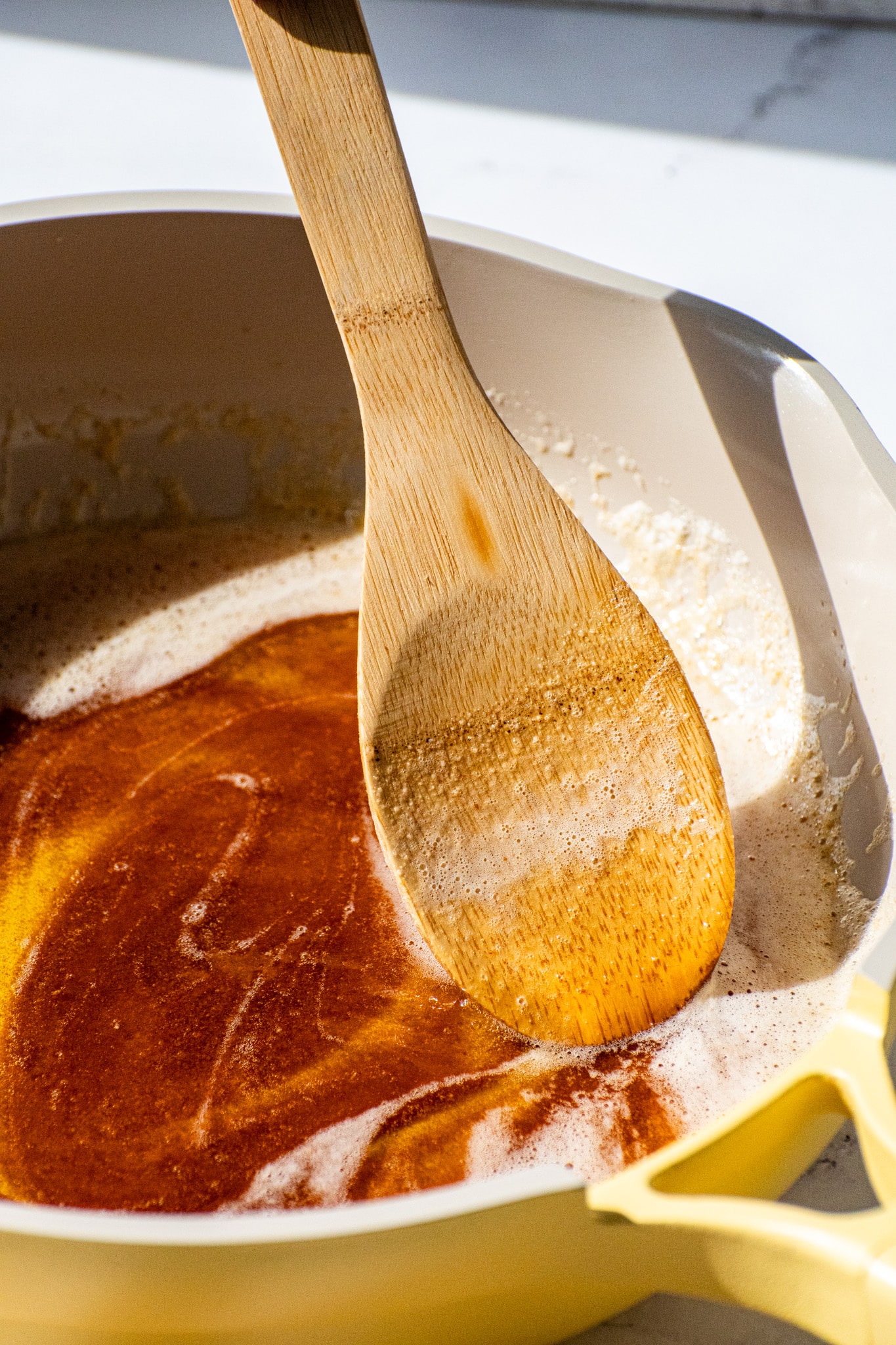
Watch How to Make Brown Butter Video Tutorial
What Is Brown Butter?
Brown butter (also called beurre noisette in French) is regular butter that has been gently melted and cooked until the milk solids turn golden brown. During this process, the butter develops a rich, nutty aroma and deeper flavor that plain butter just can’t match.
Think of it as butter on flavor steroids:
- Nutty, caramel-like notes
- A slightly toasted aroma
- Richer, more complex taste
This butter can be used in savory dishes (like pasta, fish, or vegetables) and sweet recipes (cookies, cakes, frostings). It’s one of the easiest ways to add a gourmet touch to your everyday cooking.
My personal favorite way to use it is in chocolate chip cookies. Not only does it make you sound a little boujee, but my Brown Butter Chocolate Chip Cookies are truly to die for.

Why Make Brown Butter?
You may be asking: Why go through the extra step if I can just use plain butter?
Here’s why brown butter is worth it:
- Depth of flavor – Adds nutty, caramelized richness.
- Versatility – Works in both sweet and savory recipes.
- Aromatic boost – The smell alone is irresistible.
- Simple process – Only takes 5–8 minutes.
- Elevates recipes instantly – Brown butter chocolate chip cookies or brown butter mashed potatoes? Next-level delicious.
What You’ll Need
The best part is that you only need one ingredient:
- Unsalted or salted butter (high-quality if possible)
Equipment:
- A light-colored skillet or saucepan (helps you see the browning clearly)
- A heatproof spatula or whisk
- A heat-safe bowl for cooling
Step-by-Step: How to Make Brown Butter
Making brown butter is simple, but timing matters. Follow these steps carefully:
1. Cut and Melt the Butter
- Slice your butter into even chunks for faster melting.
- Place in a light-colored pan over medium heat.

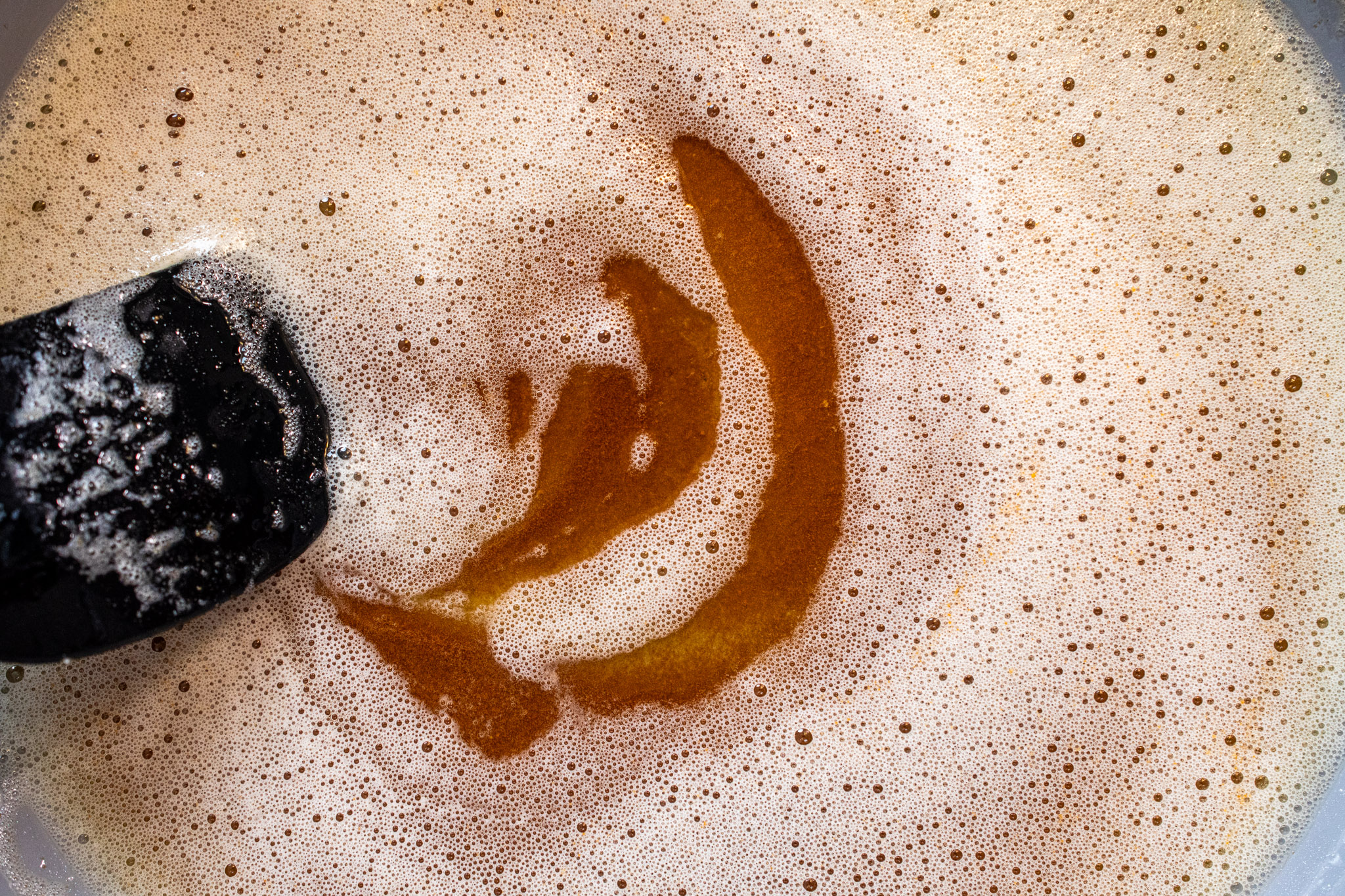
2. Watch for Foaming
- The butter will melt, then start to foam.
- Stir gently to prevent burning.

3. Browning Begins
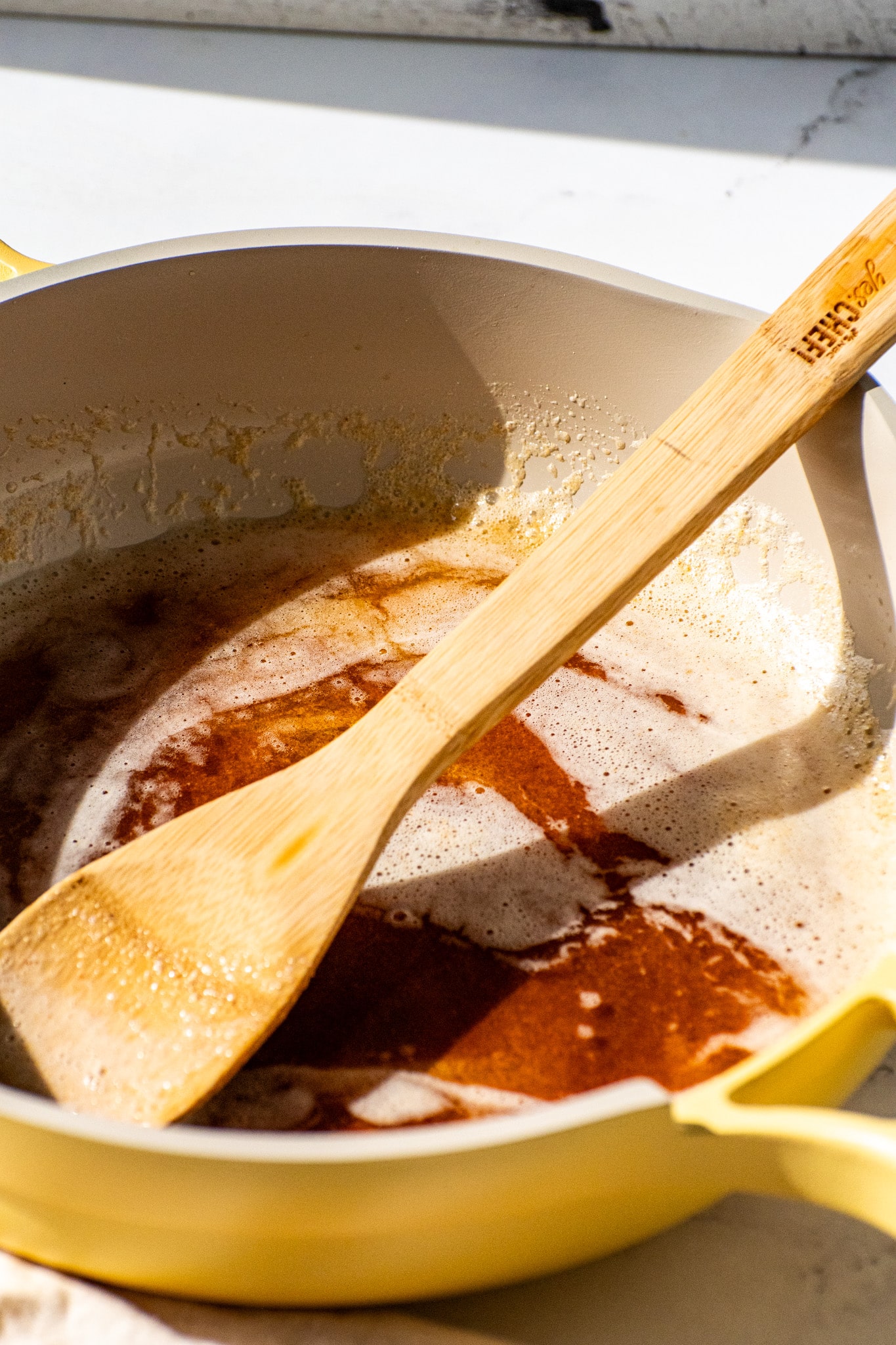
- After 4–6 minutes, you’ll see tiny brown specks at the bottom.
- This is the milk solids caramelizing.

4. Smell the Aroma
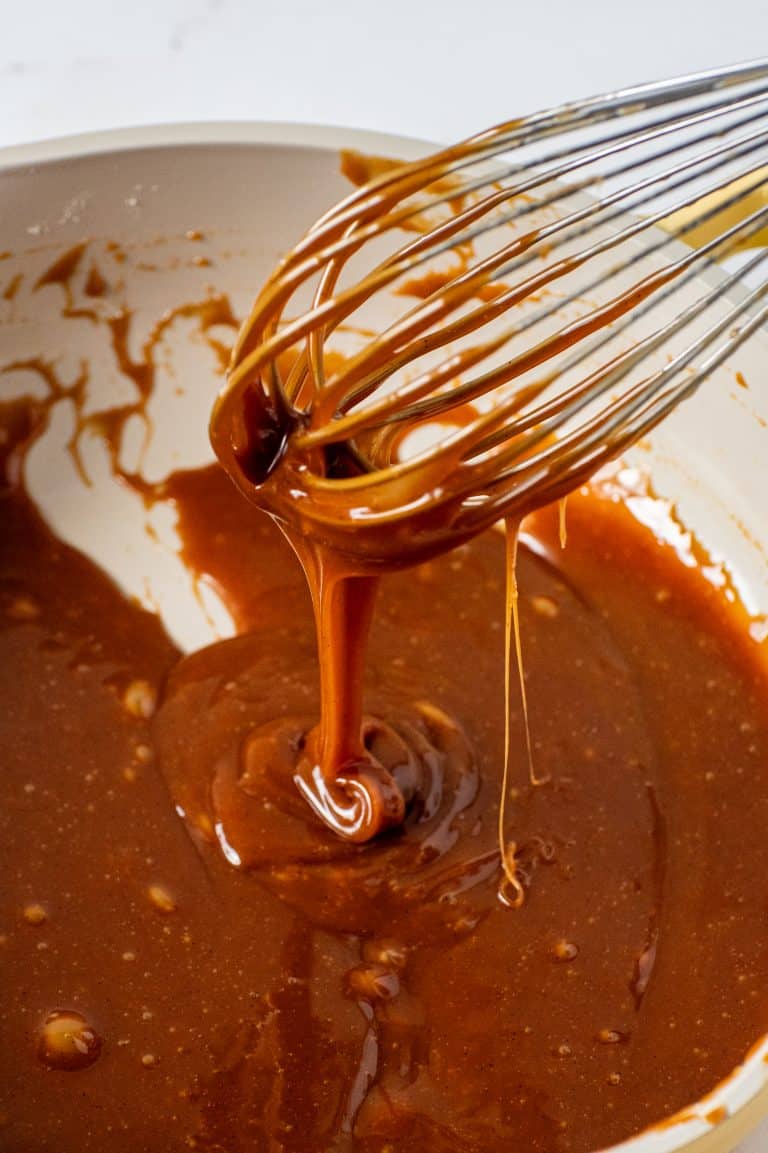
- The butter will shift from a light yellow to a golden amber.
- You’ll notice a nutty, toasty fragrance. I always say it smells like a grilled cheese sandwich! This is when it’s almost ready.
5. Remove from Heat
- Once the butter reaches a deep golden brown with plenty of brown bits, remove it from the heat immediately to prevent burning.
- Pour into a heatproof bowl to stop the cooking.
6. Cool and Use
- Let the brown butter cool for 5–10 minutes before adding it to batters or doughs. Some recipes may call for solidified butter—if that’s the case, simply refrigerate it until firm. Once chilled, you can treat it just like regular butter.
- Brown butter can be used immediately or stored for later.
How Long Does Brown Butter Take to Make?
On average, making brown butter takes 5–8 minutes. The exact time depends on:
- The amount of butter
- The type of pan
- The heat level
Remember: low and slow is better than rushing. Too much heat will burn the butter instead of browning it. It’s well worth the wait.
Common Mistakes to Avoid
Even though making brown butter is simple, there are a few pitfalls:
- Using a dark pan: hard to see the color changes, and it becomes easy to burn. Always opt for a light colored pan. I personally love this OurPlace Pan.
- Walking away: butter goes from brown to burnt quickly. Make sure you’re constantly paying attention.
- Not stirring: milk solids can stick to the bottom and scorch. Always mix gently.
- Overheating: medium heat is best; don’t crank the heat up, be patient.
How to Store and Freeze
If you don’t use it all right away, here’s how to save it:
- Room temperature – Keep covered for up to 2 days.
- Refrigerator – Store in an airtight container for 2 weeks.
- Freezer – Freeze in portions (ice cube trays work well) for up to 3 months.
To use later, simply melt or soften as needed. It’s just like regular butter at this point!
How to Substitute Brown Butter in Recipes
One of the best things about brown butter is how easy it is to swap into recipes that call for regular butter. It instantly upgrades the flavor without changing the ingredient list much. Here’s how to do it:
- Measure before browning. Always start with the exact amount of butter your recipe calls for (for example, 1 cup).
- Replace the lost liquid. After browning, stir in 1–2 teaspoons of milk, cream, or water. This makes up for the water content from the butter that evaporated and ensures your baked goods don’t turn out dry.
- Match the butter’s texture.
- If your recipe calls for melted butter, use the brown butter as is (just cooled a little).
- If it calls for softened butter, chill the brown butter until solid, then let it soften like normal.
- If it calls for cold butter, chill it until firm and cube it as you would regular butter.
That’s it! No need to melt extra butter or overthink it — just measure first, brown it, and add back a spoonful of liquid if you’re baking.

FAQs About Brown Butter
1. Does brown butter taste different than regular butter?
Yes! It’s nuttier, richer, and slightly caramel-like. It adds a great depth of flavor to your favorite recipes!
2. How do I know if I burned my brown butter?
If it smells burnt or the solids are black instead of golden brown, it’s burnt. Start over.
3. When a recipe calls for brown butter, do I measure before or after browning?
Always measure before browning. Since some liquid evaporates during the process, you’ll end up with less than you started with. Recipes are written with this in mind, so measure your butter first, then brown it.
4. Can I use salted butter?
Yes, but keep in mind it may intensify saltiness in your recipe. Adjust the other salt accordingly. I know this is controversial in the baking world, but I actually prefer using salted butter!

Try These Recipes:
- Brown Butter Chocolate Chip Cookies
- Brown Butter Pound Cake
- Brown Butter Biscoff Brownies
- Brown Butter Pecan Pie
- Brown Butter Snickerdoodle Cookies
Get to Baking!
Learning how to make brown butter is one of the simplest ways to upgrade your baking and cooking. In less than 10 minutes, you can transform ordinary butter into a golden, nutty sauce that adds depth, aroma, and flavor to almost any recipe.
Whether you drizzle it over pasta, whip it into buttercream, or stir it into cookies, brown butter instantly elevates your dish from simple to gourmet. So next time you reach for plain butter, take a few extra minutes to brown it — your taste buds will thank you!
Don’t forget to leave a review and tag me on social media @everythingjustbaked! I love seeing what you create!
Instructions
- Cut the butter into even pieces and place it in a light-colored saucepan or skillet.
- Melt the butter over medium heat. It will first melt, then foam, then begin to bubble as the water cooks off.
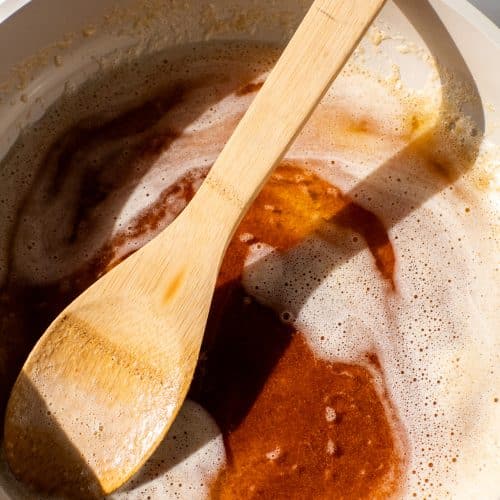
- Continue stirring occasionally. After 4–6 minutes, you’ll see brown specks forming at the bottom of the pan and smell a nutty, toasty aroma.
- Once the butter turns golden brown and fragrant, immediately remove from heat and pour into a heatproof bowl to stop the cooking.
- Cool for 5–10 minutes before using in batters or doughs. If a recipe requires softened butter, chill the brown butter until firm before using.
Video
Notes
- If substituting brown butter for regular butter in baking, add 1–2 teaspoons of milk or cream back into the recipe to replace the lost moisture.
- Brown butter can be stored in the refrigerator for up to 2 weeks or frozen for up to 3 months.


Great video, I never knew how far to cook this, I always thought it was burnt when I got the gold flecks in it.