

Vegan Vanilla Cake – Moist, Fluffy, and Easy to Make!
Looking for a soft, fluffy, and flavorful vegan vanilla cake that tastes just as good as the real thing? This is the recipe that finally checks every box. With a tender crumb, rich vanilla flavor, and zero eggs or dairy, it’s the perfect plant-based cake for birthdays, celebrations, or any sweet craving.
Looking for Vegan Chocolate Cake? We got you covered here.

Vegan Vanilla Cake Video Tutorial
Why You’ll Love This Vegan Vanilla Cake
- Light and fluffy – All thanks to using the reverse creaming method, the secret to a great cake. Learn how to master the reverse creaming method here.
- Super moist – We use a combination of vegan butter and oil to give flavor and create a moist cake. We don’t know how to create dry cakes here.
- No weird aftertaste – Aquafaba keeps it neutral and airy (no banana or applesauce flavor here).
- Easy ingredients – You likely have everything in your pantry already.
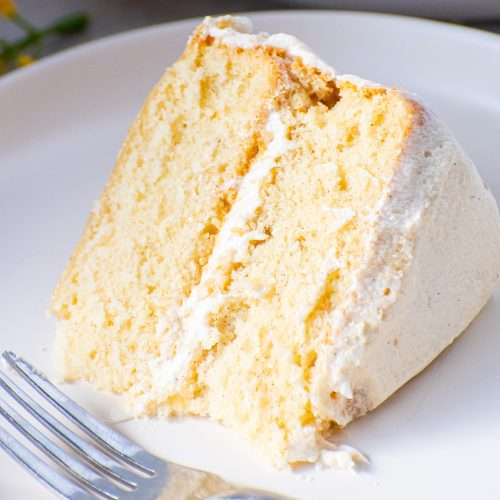
- Bakes up beautifully – Tall, golden layers that slice clean and frost like a dream.
Whether you’re fully plant-based, just baking for a vegan friend, or not vegan at all—learn how to bake moist and fluffy cakes here. This, however, is a go-to recipe that tastes anything but “vegan.”
Key Ingredients For Vegan Cakes
- Cake flour – For that super light texture. All-purpose works in a pinch, but the crumb will be denser. I use cake flour in so many recipes, and you can learn its secrets here.
- Neutral oil + vegan butter – Oil adds moisture while butter adds structure and rich flavor.
- Aquafaba – The secret to that perfect, egg-like binding without altering taste. (It’s just the liquid from a can of chickpeas—don’t worry, it won’t make your cake taste like hummus!)
- Soy milk + vinegar – Creates a homemade vegan buttermilk for tenderness and lift.
- Vanilla bean paste – Elevates the flavor with those tiny vanilla flecks.
You’ll notice many ingredients, and the instructions are from our Famous Vanilla Cake Recipe. This is just the vegan version of it!

Do I Need Vanilla Bean Paste for This Vegan Vanilla Cake Recipe?
Technically, you can use vanilla extract, but we highly recommend vanilla bean paste if you want the best possible flavor. It gives this cake a deeper, richer vanilla profile and adds those beautiful little vanilla specks throughout the crumb. Since this cake doesn’t rely on eggs or dairy for richness, the added intensity from vanilla bean paste really makes a difference. You’ll taste the upgrade in every bite.
Don’t worry, though, you can use vanilla bean paste in any recipe, so it won’t go to waste! I love adding it to my Vegan Vanilla Frosting Recipe.
How to Make Vegan Vanilla Cake (Step-by-Step)
- Prep the buttermilk: Combine soy milk and vinegar. Let it curdle while you mix the other ingredients.

2. Reverse cream: Combine dry ingredients (not including the cornstarch), then mix in the cold vegan butter until it’s crumbly. I like to use a fork or my hands for this.
Learn all about the benefits of Reverse creaming in our guide, The Reverse Creaming Method: The Secret to Moist, Fluffy Cakes.


3. Mix wet ingredients: In the same bowl as the prepared “buttermilk,” mix in the oil, water, aquafaba, vanilla, and cornstarch.

4. Combine: Mix half the wet ingredients into the dry and whisk just until smooth and creamy (about 1–2 minutes). Add in the remaining wet ingredients and mix until just combined. Do not overmix.
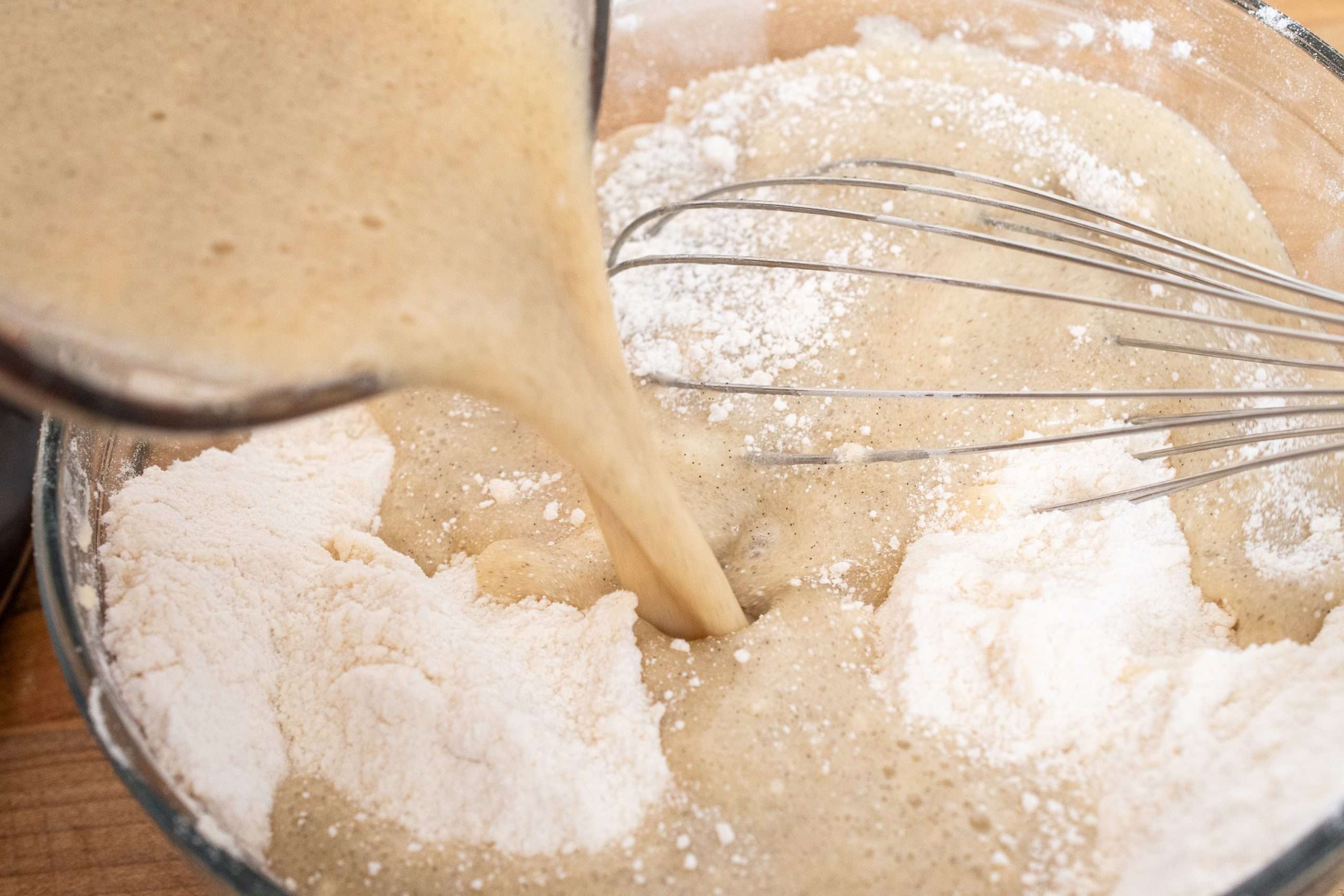

5. Rest the batter: Let sit for 5–10 minutes to hydrate and bind. This will give you a better texture for your vegan vanilla cake.
6. Bake: Divide between two 8-inch pans and bake for about 30 minutes or until golden and springy.

Cake Pans Matter: Choosing the Right Pan for Homemade Cakes
Believe it or not, the type of cake pan you use affects the outcome of your cake. Here’s why:
- Light metal pans: Reflect heat, leading to a more even bake.
- Dark metal pans: Absorb more heat, which can cause the edges to bake too quickly and dry out.
I highly recommend using Fat Daddio’s cake pans. They bake evenly and help achieve that perfect height and golden finish every time.
Pro Tips for Success
- Use cold vegan butter. It makes reverse creaming work best and avoids a greasy texture. Vegan butter melts very easily, so there’s no need to soften it here.
- Let the batter rest. This is crucial for binding and structure in eggless cakes.
- Don’t skip the aquafaba. It creates a lighter, more structured crumb than applesauce or banana. Remember, it’s just the juice of the chickpeas!
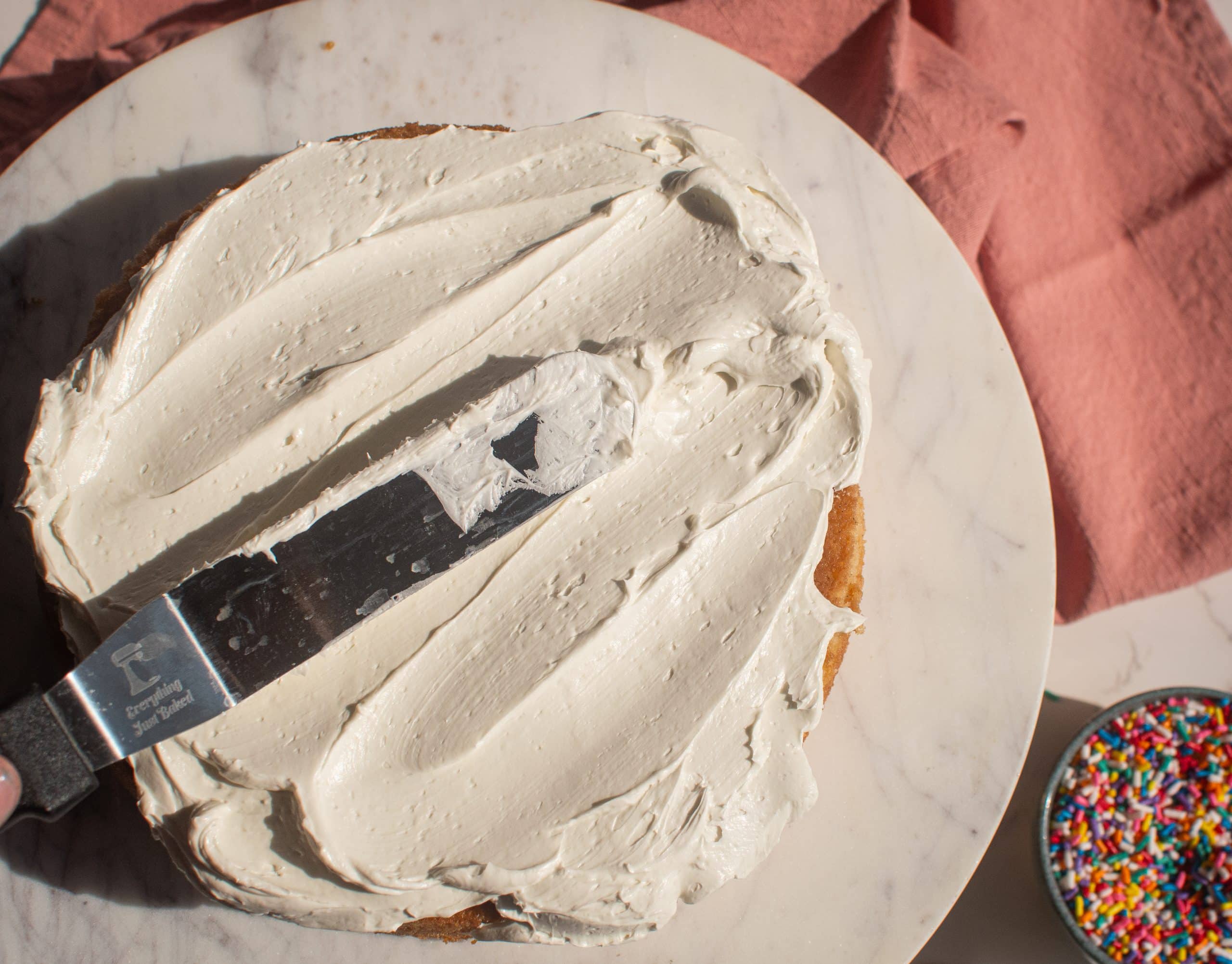
- Cool completely before frosting. Chilling the layers locks in moisture and makes decorating easier. For tips on frosting cakes, check out my guide, How to Frost a Cake Like a Pro.
How to Store Vegan Cakes
Wrap cooled vegan vanilla cake layers in plastic wrap and store:
- At room temp (unfrosted): up to 1 day
- In the fridge (frosted or unfrosted): up to 4 days
- In the freezer: up to 2 months
When decorating cakes, I always freeze my cakes. This allows the decorating process to go as easily as possible. We go over all my decorating secrets here.
Frequently Asked Questions
Can I use almond milk instead of soy milk?
Yes, but soy milk is preferred because it has a higher protein content, which helps give the cake a better structure. Almond milk, oat milk etc, will work, but the crumb may be slightly softer.
What can I use instead of aquafaba?
You can substitute 1:1 with unsweetened applesauce, but the texture will be slightly denser. Aquafaba helps keep the crumb light and fluffy.
We do the same technique using aquafaba in our Moist Vegan Chocolate Cake.
Can I make this gluten-free?
Yes! Use a 1:1 gluten-free baking flour blend.
Can I make this as cupcakes?
Absolutely. This recipe makes about 22–24 standard cupcakes. Bake at 350°F for 18–22 minutes, or until a toothpick comes out clean.
Do I need to use vanilla bean paste?
No, but we highly recommend it! It gives the cake a deeper vanilla flavor and those beautiful specks throughout the crumb. Regular vanilla extract works in a pinch.

Troubleshooting Common Vegan Cake Problems
Why is my vegan vanilla cake gummy or dense?
This usually happens when the batter is overmixed or there’s too much moisture. Letting the batter rest before baking and using the correct amount of flour (we recommend cake flour) can help.
Why did my cake sink in the middle?
Your cake may not have baked long enough or the oven temperature was too low. Always check with a toothpick in the center and avoid opening the oven too early.
Why is my cake dry?
It could be slightly overbaked, or you may have used too much flour. Make sure to measure flour using a kitchen scale or spoon-and-level method. By using oil and vegan butter, this is nearly impossible. We go over how to make any cake moist and fluffy here.
Why does my cake stick to the pan?
Make sure to grease and line your pans with parchment paper. Fat Daddio’s pans also help with easy release!
Why does the texture feel oily or greasy?
This can happen if the vegan butter was too soft or the reverse creaming step wasn’t done properly. Use cold vegan butter and mix until you get that sandy texture. Make sure to use sticks of vegan butter—nothing in a tub, as it’s usually too soft and unstable for creaming.
Can I make this vegan cake chocolate?
Not this recipe, but don’t worry, we’ve got a delicious, moist vegan chocolate cake recipe here.
Now Get to Baking!
This vegan vanilla cake really can’t be simpler. Happy baking and don’t forget to leave a comment below on how it went! We love hearing from you.

Don’t Forget the Vegan Frosting:
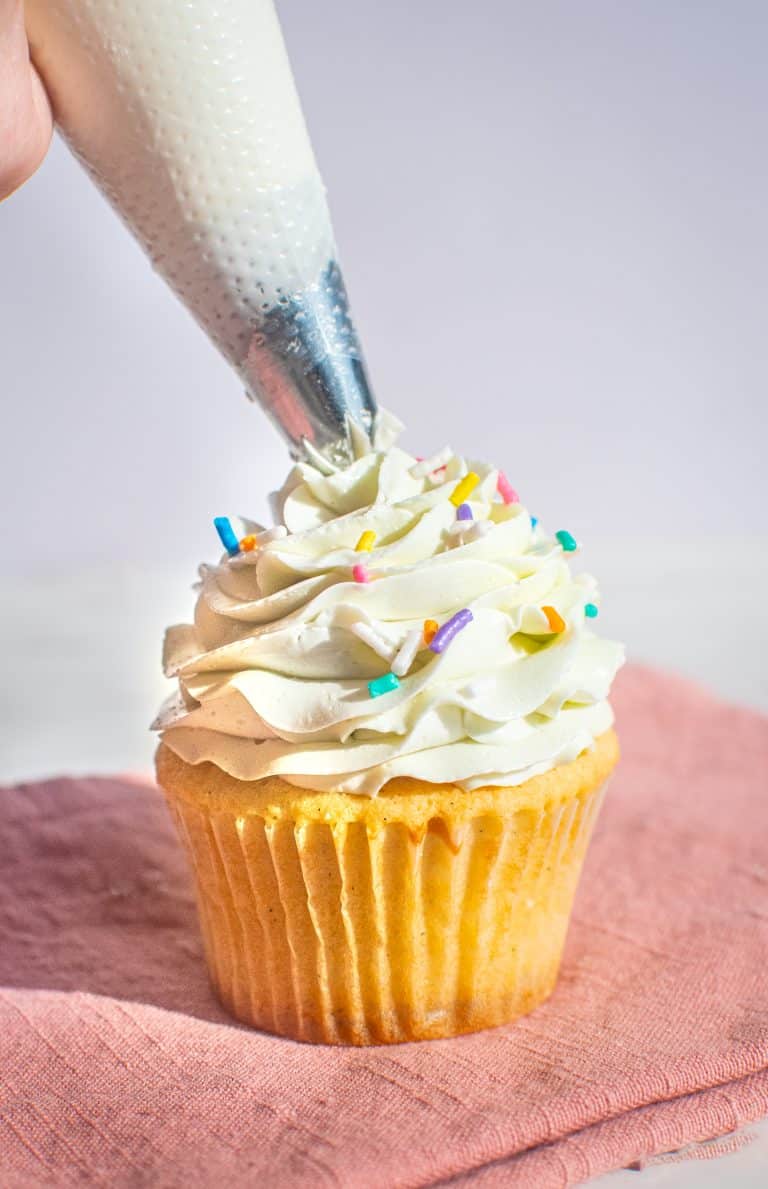
Try our delicious Vegan Buttercream Recipe that pairs perfectly with this vegan vanilla cake or our Vegan Chocolate Frosting! Yum!
Ingredients
- 2 ½ cups cake flour
- 1 ½ cups granulated white sugar
- 1 tsp baking powder
- ½ tsp baking soda
- ½ tsp salt
- 4 tbsp vegan butter cold and cubed
- 6 tbsp neutral oil canola, vegetable, or avocado
- 2 tbsp vanilla bean paste or extract
- ½ cup soy milk + 2 tsp vinegar (let sit 5–10 min to curdle)
- ½ cup water
- 2 tbsp aquafaba (liquid from canned chickpeas)
- 2 tbsp cornstarch
- 1 batch
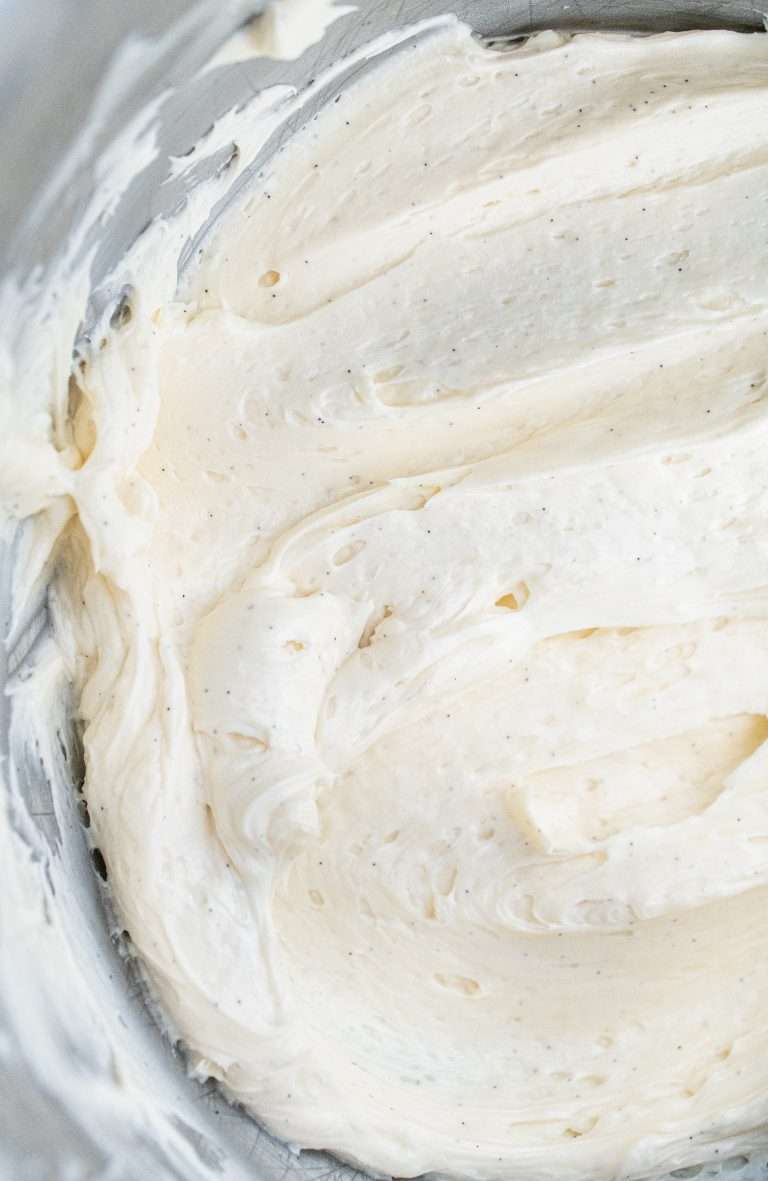
Vegan Vanilla Buttercream
Instructions
- Preheat oven to 350°F (175°C). Grease and line two 8-inch round cake pans.
- Mix soy milk and vinegar, set aside for 5–10 minutes.
- Whisk dry ingredients in a stand mixer or large bowl: flour, sugar, baking powder, baking soda, and salt. (not the cornstarch)
- Add cold vegan butter to the dry mix and mix until it resembles wet sand. There should be small chunks of butter.
- In a separate bowl, whisk together the buttermilk, oil, water, aquafaba, cornstarch, and vanilla.
- Add in half the wet mixture to the dry and beat until smooth and creamy, about 1-2 minutes. Add in the reaminng wet mixing until just combined. Let the batter rest for 5–10 minutes.
- Divide evenly between pans and bake for 30–35 minutes, or until the center springs back and a toothpick comes out clean.
- Cool completely before frosting.
Video
Notes
- Try our Vegan Vanilla Buttercream
- Use cake flour for the lightest, fluffiest texture. All-purpose flour works in a pinch, but the crumb will be denser.
- Don’t skip the resting time before baking (5–10 minutes). It helps hydrate the flour and improves structure—especially important in eggless cakes.
- Cold vegan butter helps the reverse creaming method work best. If your butter is too soft, the crumb may turn out gummy or greasy.
- Soy milk is recommended for structure and a balanced crumb. You can use oat milk, but the texture may be softer or more tender.
- Aquafaba is the liquid from canned chickpeas. You won’t taste it in the final cake, and it acts as a binder to replace eggs.



Thank you for the recipe. Does this work well with stacking cakes? Is this a sturdy Vegan cake recipe?
Totally! I reccomend working with cold cakes for ease.
I may have overlooked, but should I use salted or unsalted vegan butter?
Either will work! I typically bake with salted butter